No products in the cart.
Hair Care for Men: The Ultimate Guide to Healthy, Strong Hair
Most men don’t think about hair care until they notice a receding hairline in the mirror or a few extra strands on the pillow. By then, the habits that could have slowed things down have usually been missing for years. Good hair care for men isn’t complicated, but it does need to be consistent, and it needs to start before hair loss becomes visible.
This guide walks through why men lose hair, how to spot the early warning signs, and a practical hair care routine for men that actually holds up to daily life, work, sweat, gym sessions, and everything in between.
Common Causes of Hair Loss in Men
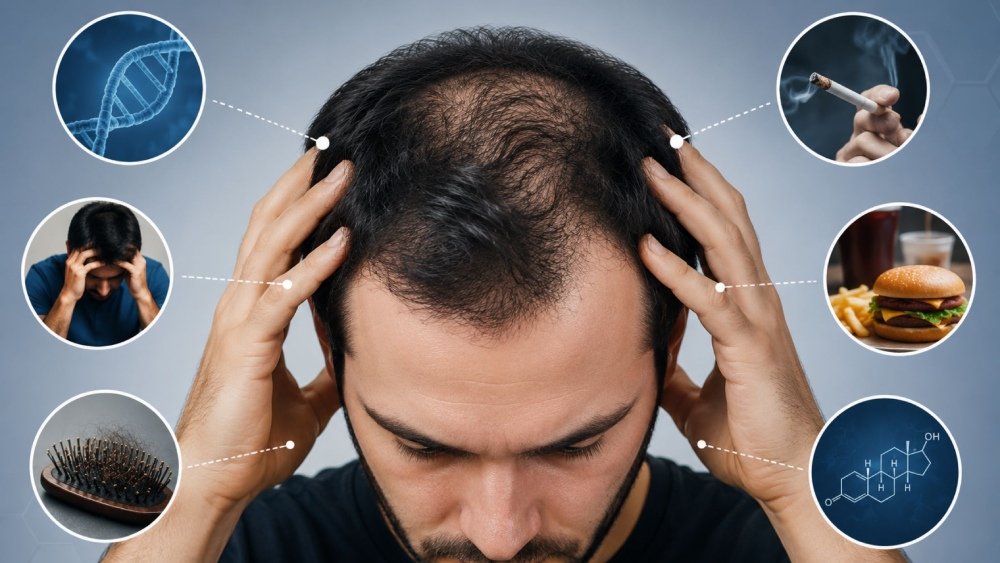
Understanding the causes of hair loss in men is the first step towards choosing the right treatment or hair care routine. Hair loss is rarely caused by just one factor; instead, it’s often the result of a combination of genetic, lifestyle, and environmental influences:
- Genetics and DHT sensitivity. The most common cause by far is androgenetic alopecia, better known as male pattern baldness. It’s driven by a hormone called dihydrotestosterone (DHT), which gradually shrinks hair follicles until they stop producing visible hair. A population-based study published in the Indian Journal of Dermatology, Venereology and Leprology found that androgenetic alopecia affects 58% of Indian men between the ages of 30 and 50, with prevalence rising sharply with age from around 16% of men in their twenties to over 50% of men past 50.
- Stress-related shedding. Physical or emotional stress can push hair follicles into a resting phase, causing noticeably increased shedding a few months later, a condition called telogen effluvium.
- Poor diet and nutrient deficiencies. Hair follicles are metabolically active tissue, so they’re sensitive to gaps in protein, iron, and certain vitamins.
- Heat, chemical, and mechanical damage. Daily blow-drying, harsh shampoos, tight caps, and rough towel-drying weaken the hair shaft over time and add to overall thinning.
- Underlying health conditions. Thyroid issues, scalp infections, and certain medications can all contribute to hair loss and are worth ruling out with a doctor if shedding is sudden or patchy.
Knowing the cause matters because the fix is different in each case; a DHT-driven pattern needs a different approach than damage from over-styling.
Early Signs of Male Pattern Baldness
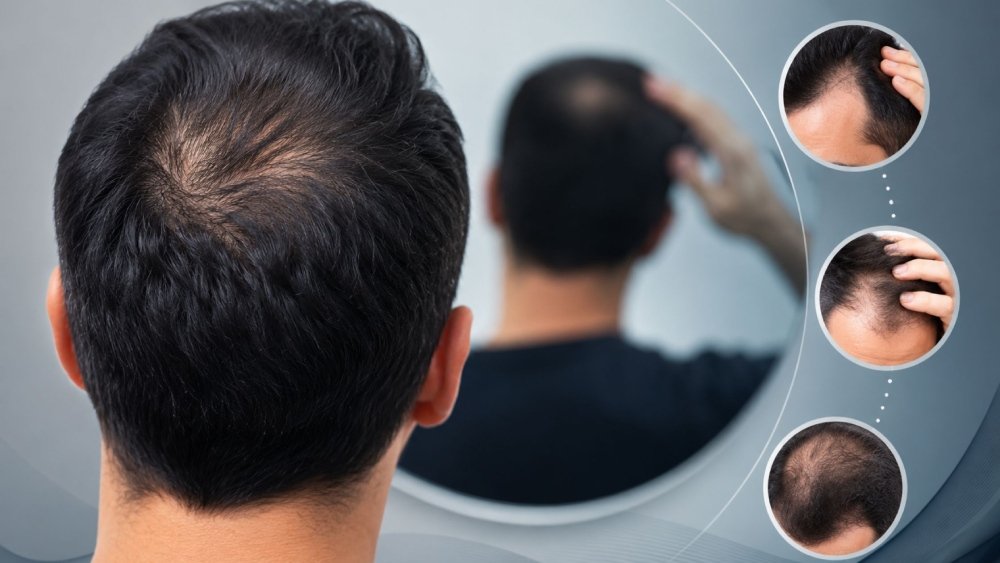
Male pattern baldness rarely shows up overnight. It follows a fairly predictable pattern, and catching it early gives you more options for managing it. Watch for:
- A hairline that’s slowly forming an “M” shape at the temples.
- Thinning or a widening part at the crown, often noticed by a barber before you see it yourself.
- More visible scalp under bright light or in photos.
- Hair that feels finer or “wispier” than it used to, even if it hasn’t fallen out yet.
- Increased shedding when showering or brushing, more than the roughly 50–100 hairs a day that’s considered normal.
If you’re spotting two or more of these signs, it’s important to understand whether you’re dealing with temporary hair shedding or the early stages of male pattern baldness. Knowing the difference helps you choose the right approach.
Hair Fall vs Baldness
These two terms get used interchangeably, but they’re not the same thing.
“Hair fall” refers to the natural, ongoing shedding of hair as part of the growth cycle or a temporary spike in shedding due to stress, illness, or poor diet. It’s usually reversible once the underlying trigger is addressed.
Baldness refers to a permanent reduction in hair density, most often caused by androgenetic alopecia, where follicles shrink to the point they stop producing terminal (visible) hair altogether.
In short, hair fall is a symptom; baldness is often the long-term result of the follicle damage that untreated or unmanaged hair fall can lead to over years.
Once you’ve identified whether you’re dealing with temporary hair fall or early-stage baldness, the next step is building a consistent routine that supports scalp health and helps protect existing hair.
Best Hair Care Routine for Men

A solid hair care routine for men doesn’t need ten products; it needs the right four or five steps, done consistently.
- Cleanse regularly, but not excessively. Washing 3–4 times a week with a sulfate-free shampoo keeps the scalp free of oil and buildup without stripping natural oils. If flaking or itchiness is an issue, it’s worth reading through this anti-dandruff treatment guide to identify whether it’s dandruff or a dry scalp.
- Condition to protect the hair shaft. A lightweight conditioner reduces breakage from friction and makes hair more manageable, especially for men with wavy or thick hair.
- Treat the scalp, not just the hair. This is where targeted treatments come in. For early thinning, a hair growth kit for men is worth adding at this stage rather than waiting until hair loss is advanced.
- Protect from heat and sun. Minimize high-heat drying, and if you’re outdoors often, a hat or a leave-in product with UV protection helps prevent shaft damage.
- Get regular trims. Trimming every 6–8 weeks removes split ends before they travel up the shaft and make hair look thinner than it is.
A consistent routine lays the foundation for healthier hair, but long-term results also depend on the small habits you follow every day. Simple changes to the way you wash, dry, style, and handle your hair can reduce breakage and help maintain stronger, healthier strands.
Essential Hair Care Tips for Men
Small daily habits can make a noticeable difference to your hair’s health over time. These hair care tips for men can help reduce damage, support a healthier scalp, and keep your hair looking its best.
- Use lukewarm water instead of hot. Hot water strips natural oils and dries out the scalp
- Pat hair dry with a soft towel instead of rubbing vigorously
- Comb wet hair with a wide-tooth comb to reduce breakage
- Avoid tying hair too tight if you wear it long, as constant tension can cause traction-related thinning
- Change your pillowcase to a smoother fabric if you notice a lot of morning tangling or frizz
- Keep styling products light. Heavy waxes and gels left on overnight can clog follicles
Good grooming habits help minimise everyday damage, but maintaining healthy hair goes beyond how you wash and style it. Lifestyle choices, stress levels, and nutrition also influence the health of your scalp and hair over time.
How to Slow Down Hair Loss Naturally
While genetics can’t be changed, several natural habits can support the hair you have and slow visible thinning:
- Scalp massage. A few minutes daily may improve blood flow to hair follicles, which some small studies link to modest improvements in hair thickness.
- Reduce chronic stress. Since stress-driven shedding is well documented, basic stress management, sleep, exercise, and downtime have a direct payoff for hair health.
- Cut back on harsh chemical treatments. Frequent bleaching, relaxing, or perming weakens hair structurally.
- Support the diet. Adequate protein and iron intake directly support the hair growth cycle (more on this below).
- Use gentle, sulfate-free products. Harsh surfactants strip the scalp barrier, which can indirectly contribute to more shedding over time.
None of these reverse genetic hair loss on their own, but combined with a proper routine, they meaningfully slow the pace of visible thinning.
While these habits work together to support healthier hair, one factor deserves a closer look: stress. Unlike genetics, stress-related hair loss is often temporary and can improve once the underlying trigger is addressed.
Does Stress Cause Hair Loss in Men?
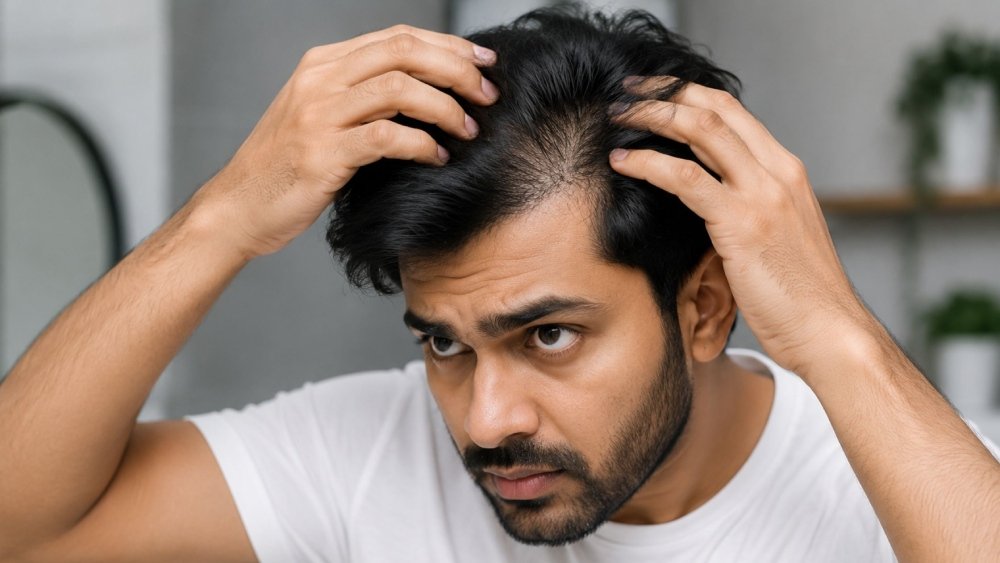
Yes, but it’s usually a specific, temporary type of hair loss rather than permanent baldness. Significant stress can push large numbers of hair follicles into a resting phase, a condition called telogen effluvium, which causes noticeable shedding a few months after the stressful event. The good news is that this type of hair loss is usually reversible once the stress trigger is resolved and the hair cycle resets.
While reducing stress can help minimise temporary shedding, healthy hair growth also depends on giving your body the nutrients it needs. A balanced diet supports stronger hair and helps reduce deficiencies that may contribute to thinning.
Best Diet for Healthy Hair Growth
A balanced diet supports healthy hair growth by providing the nutrients your hair follicles need to function properly. While diet alone won’t reverse genetic hair loss, addressing nutritional deficiencies can help reduce excessive shedding and support stronger, healthier hair.
Focus on including:
- Protein: Supports healthy hair growth.
- Iron: Helps prevent deficiency-related hair thinning.
- Omega-3 fatty acids: Support scalp health.
- Zinc and biotin: Contribute to normal hair structure.
- Vitamin C: Helps improve iron absorption.
This keeps the section concise, practical, and within the scope of the article.
Alongside a consistent routine and healthy lifestyle habits, it’s equally important to separate fact from fiction. Many common beliefs about hair loss are based on myths that can lead to unnecessary worry or ineffective treatments.
Hair Loss Myths Men Should Stop Believing
- “Wearing a hat causes baldness.” Hats don’t cut off circulation to the scalp or cause pattern baldness. Genetics and DHT are the real drivers.
- “Frequent shampooing causes hair loss.” Washing doesn’t cause hair loss. It just removes hair that was already in the shedding phase. Skipping washes doesn’t “save” hair.
- “Hair loss only comes from your mother’s side.” Genetic hair loss risk comes from both parents, not just the maternal line.
- “Cutting hair makes it grow back thicker.” Trimming affects split ends, not follicle activity or hair diameter.
- “Hair loss means you’re going fully bald.” Many men experience a receding hairline or crown thinning that plateaus and never progresses to complete baldness.
Understanding the facts about hair loss helps you make better decisions about your routine and avoid ineffective practices. With that foundation in place, the next step is focusing on habits that help maintain healthy, fuller-looking hair as you get older.
How to Maintain Thick Hair After 30
Hair density naturally starts to shift for many men in their 30s as hair cycles slow and some follicles miniaturize. To hold onto thickness:
- Start a consistent scalp-focused routine now rather than waiting for visible thinning
- Prioritize protein and iron intake, since deficiencies become more noticeable with age
- Reduce heat styling frequency and switch to lower-heat settings
- Address stress and sleep quality, both of which affect the hair growth cycle
Track density with photos every few months; early changes are much easier to notice in comparison than in the mirror day-to-day.
.
Conclusion
Hair care for men isn’t about chasing a single miracle product; it’s about a routine that’s realistic to maintain: gentle cleansing, scalp care, a decent diet, and catching early signs before they become harder to manage. Start with the basics above, stay consistent for a few months, and adjust based on what your hair and scalp actually need.
If you’re also looking for guidance tailored to women’s hair concerns, our hair care for women guide covers the key differences in hair structure, hormones, and care routines.
Frequently Asked Questions
How often should men wash their hair?
For most men, washing 3–4 times a week is ideal. Daily washing with harsh shampoos can dry out the scalp, while infrequent washing lets oil and product buildup clog follicles.
How should men care for curly hair?
Curly hair needs extra moisture to stay healthy and defined. Men with curly hair should use a sulfate-free shampoo, condition regularly, detangle with a wide-tooth comb while the hair is damp, and use a leave-in conditioner or curl cream to reduce frizz and maintain curl definition.
Can hair loss in men be reversed?
Stress-related and nutrient-deficiency-related hair loss is often reversible once the cause is addressed. Genetic pattern baldness (androgenetic alopecia) can't be fully reversed, but its progression can be slowed with consistent care and early intervention.
How can men take care of dry hair?
Men with dry hair should use a hydrating shampoo and conditioner, avoid washing with very hot water, limit heat styling, and apply a lightweight leave-in conditioner or hair oil when needed. Keeping the scalp moisturised and staying hydrated can also help improve overall hair health.
Does diet alone fix hair loss?
Diet can resolve hair loss caused by nutrient deficiency, but it won't stop genetically driven pattern baldness on its own. It works best as one part of a full routine rather than a standalone fix.
Leave a Reply